
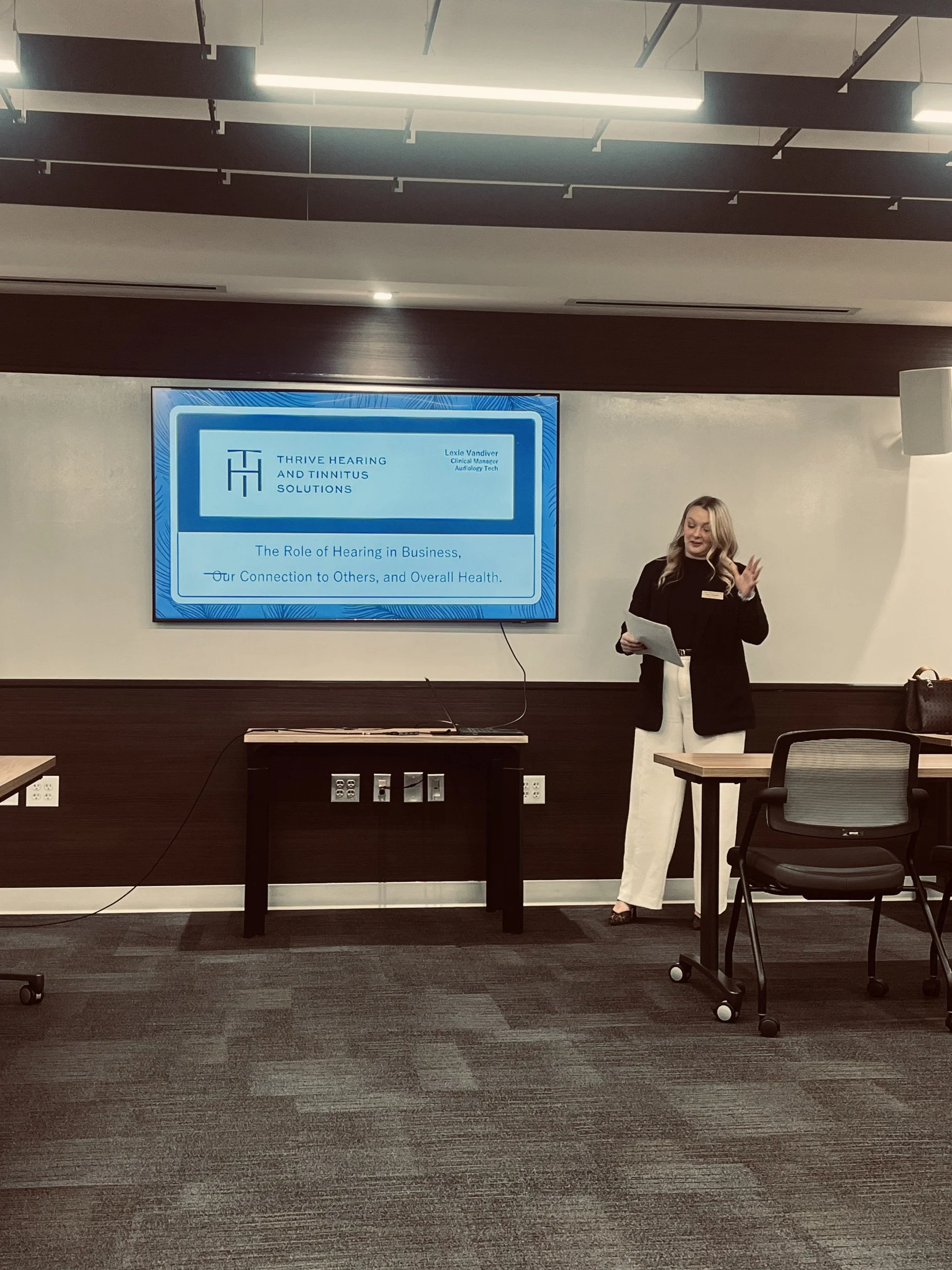
Recently, our Clinical Manager, Lexie Vandiver, had the opportunity to speak at 901 Networking about a topic that often goes overlooked in professional spaces: the role of hearing in business, connection, and overall health.
While leadership, communication skills, and productivity strategies are common business topics, hearing health is rarely part of the conversation — yet it directly impacts all three.
Hearing and Professional Connection
At its core, business is built on relationships. Whether you're leading a team, negotiating a contract, networking at events, or collaborating with colleagues, clear communication is essential.
Untreated hearing loss can lead to:
Misunderstandings during meetings
Difficulty hearing in group settings or background noise
Increased listening fatigue
Avoidance of networking events or social gatherings
When hearing becomes strained, connection suffers. Professionals may begin withdrawing from conversations, contributing less in meetings, or avoiding environments where communication feels exhausting.
Strong businesses are built on strong relationships — and strong relationships require clear hearing.
The Productivity Factor
One of the most impactful points Lexie shared was how hearing loss and tinnitus affect workplace productivity.
When the brain has to work harder to process sound, cognitive resources are redirected from focus and performance to simply “figuring out what was said.” This listening fatigue can result in:
Mental exhaustion by midday
Reduced concentration
Slower processing speed
Increased stress levels
Tinnitus — often described as ringing or buzzing in the ears — can also interfere with focus, sleep quality, and emotional well-being. Over time, these challenges can quietly impact job performance and overall satisfaction at work.
Hearing and Overall Health
The conversation extended beyond business performance into long-term health.
Research consistently shows connections between untreated hearing loss and:
Increased risk of cognitive decline
Social isolation
Anxiety and depression
Hearing is not just about ears — it is about brain health, emotional well-being, and quality of life.
When professionals prioritize their hearing health, they are investing not only in clearer conversations but also in sharper cognition and stronger personal connections.
A Call to Be Proactive
One of the key takeaways from Lexie’s presentation was simple: Hearing health is proactive, not reactive.
You don’t have to wait until communication becomes a daily struggle. Regular hearing evaluations, early intervention, and education about tinnitus and sound health can protect both your career and your overall well-being.
In business, we invest in tools, technology, training, and growth strategies. Hearing health deserves a place in that investment strategy too.
At Thrive Hearing and Tinnitus Solutions, we are passionate about helping professionals stay connected — in the boardroom, at networking events, and in everyday life.
Because when you hear well, you lead well.